
Norfolk’s Baby Seal Season Has Begun
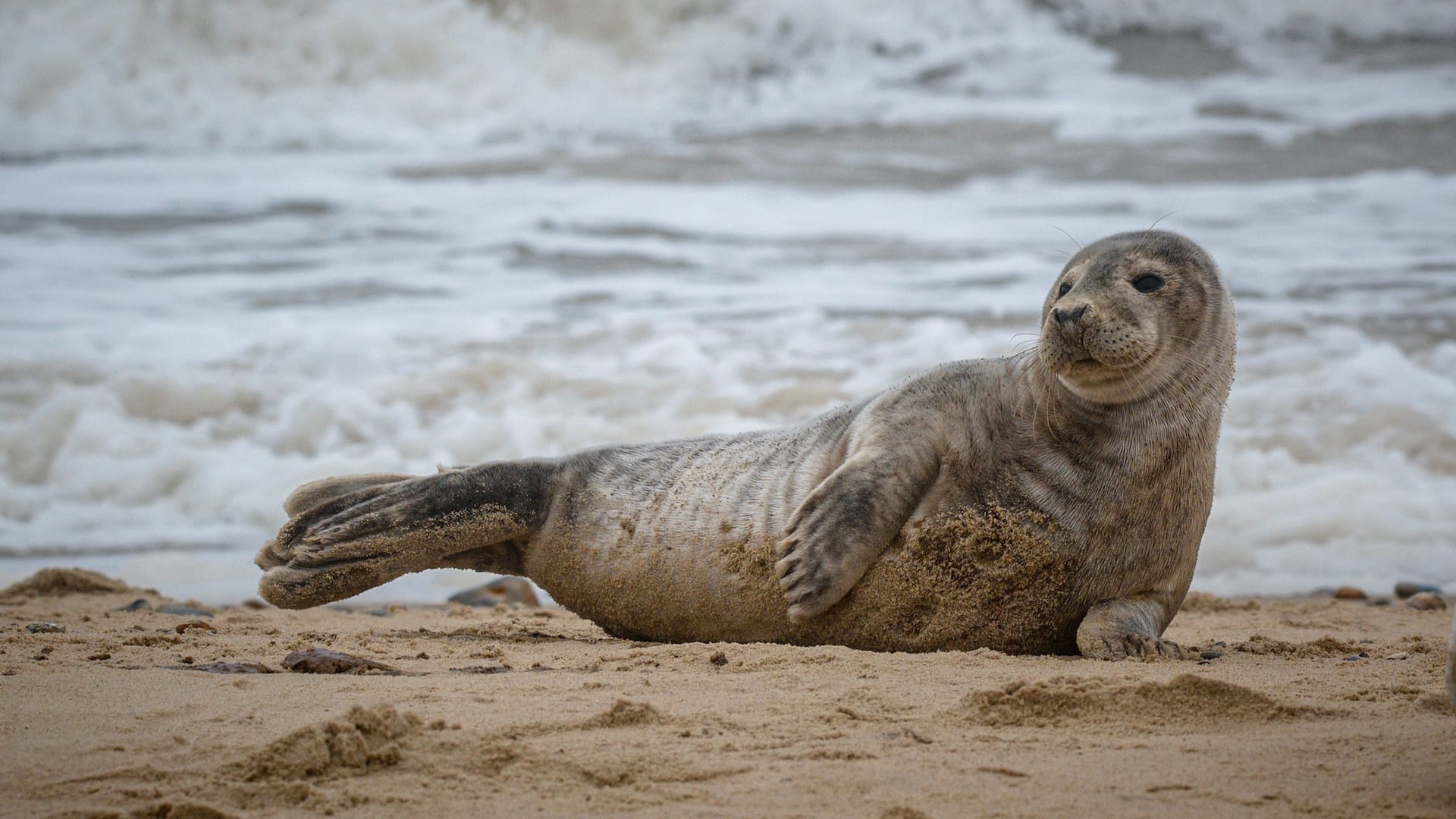
One of Norfolk’s most magical winter wildlife spectacles is beginning again, as grey seals return to stretches of our coastline to give birth to their pups.
From early November through to January, beaches around Horsey and Winterton become an important nursery for grey seals, while Blakeney Point is home to England’s largest grey seal colony.
For anyone who has never seen the spectacle before, it really is one of those moments that makes you appreciate just how extraordinary our local coastline can be.
Newborn grey seal pups are easy to recognise thanks to their fluffy white coats. They spend their first few weeks on the beach, relying completely on their mothers and feeding on extremely rich milk.
And they grow remarkably quickly.
During those first weeks, a pup can gain around two kilograms in weight every day. After roughly three weeks, its mother leaves and the youngster remains on the beach while it moults its fluffy white coat before eventually heading into the sea and learning to fend for itself.
The numbers involved are remarkable too.
At Blakeney Point, around 9,000 grey seal pups are now born each year, making it England’s largest colony. The population has grown enormously since the first pup was recorded there in 1988.
Horsey and Winterton also provide an incredible spectacle. More than 3,000 pups were born along this stretch of the Norfolk coast during the previous breeding season.
Seeing the seals safely
It is tempting to try to get close to a seal pup, particularly if one appears to be alone, but this is exactly when giving them space matters most.
Friends of Horsey Seals recommends staying at least 10 metres away – roughly the length of a bus – and visitors should never get between a seal and the sea.
At Horsey, visitors should use the designated paths and viewing areas rather than approaching animals on the beach. Volunteer wardens are often around during the busiest part of the season to help visitors and answer questions.
Dogs should also be kept under very close control and away from the colony.
And don't panic if you see a young seal sitting on its own.
A mother may temporarily have moved away, while older pups are naturally left alone once they have been weaned. The main colonies are monitored, so an apparently lonely pup usually doesn't need rescuing.
At Blakeney Point, visitors cannot walk to the seal colony during pupping season because disturbance could put the animals at risk. Seal boat trips operating from around Morston provide another way of experiencing the wildlife while keeping a safe distance.
A Norfolk winter spectacle
We sometimes associate Norfolk's coast with summer days, fish and chips and packed beaches, but winter reveals an entirely different side to it.
Wrap up warm, take the binoculars and head towards the coast and you could witness something genuinely special happening almost on our doorstep.
Just remember: watch, enjoy, take photographs – but give Norfolk’s newest arrivals plenty of room.



On Air Next
-
 Jono Woodward
7:00am - 10:00am
Getting your weekend off to the best start, join Jono with Saturday Breakfast
Broadland Poll
Get The Broadland App