

Look Up! Norfolk's Spectacular Winter Visitors Are Returning
At first you may hear them before you see them.
A distant chorus of honking drifts across the countryside, you look upwards, and suddenly the sky is filled with one of Norfolk's most impressive natural sights — a great formation of geese travelling overhead.
The return of the pink-footed goose is one of those unmistakable signs that autumn has properly arrived.
These remarkable birds travel south from breeding grounds in Greenland and Iceland to spend the colder months in Britain, with East Anglia one of their important winter destinations.
Norfolk Wildlife Trust says pink-footed geese are normally seen here between October and April, with around 360,000 spending the winter in the UK.
And you do not necessarily need to consider yourself a birdwatcher to appreciate them.
Their characteristic V-shaped formations — known as skeins — can appear above villages, roads, marshes and open countryside, accompanied by the unmistakable sound of dozens or even hundreds of birds calling to each other.
It is one of those extraordinary wildlife moments that can happen while you are simply putting the bins out or driving to work.
The North Norfolk coast is particularly associated with the spectacle.
During winter, large numbers feed on farmland and wetlands during the day before travelling between feeding and roosting areas. Coastal marshes, open farmland and nature reserves can all provide opportunities to see them.
Early mornings and late afternoons can be particularly atmospheric, when enormous Norfolk skies combine with low autumn light and the sound of geese moving overhead.
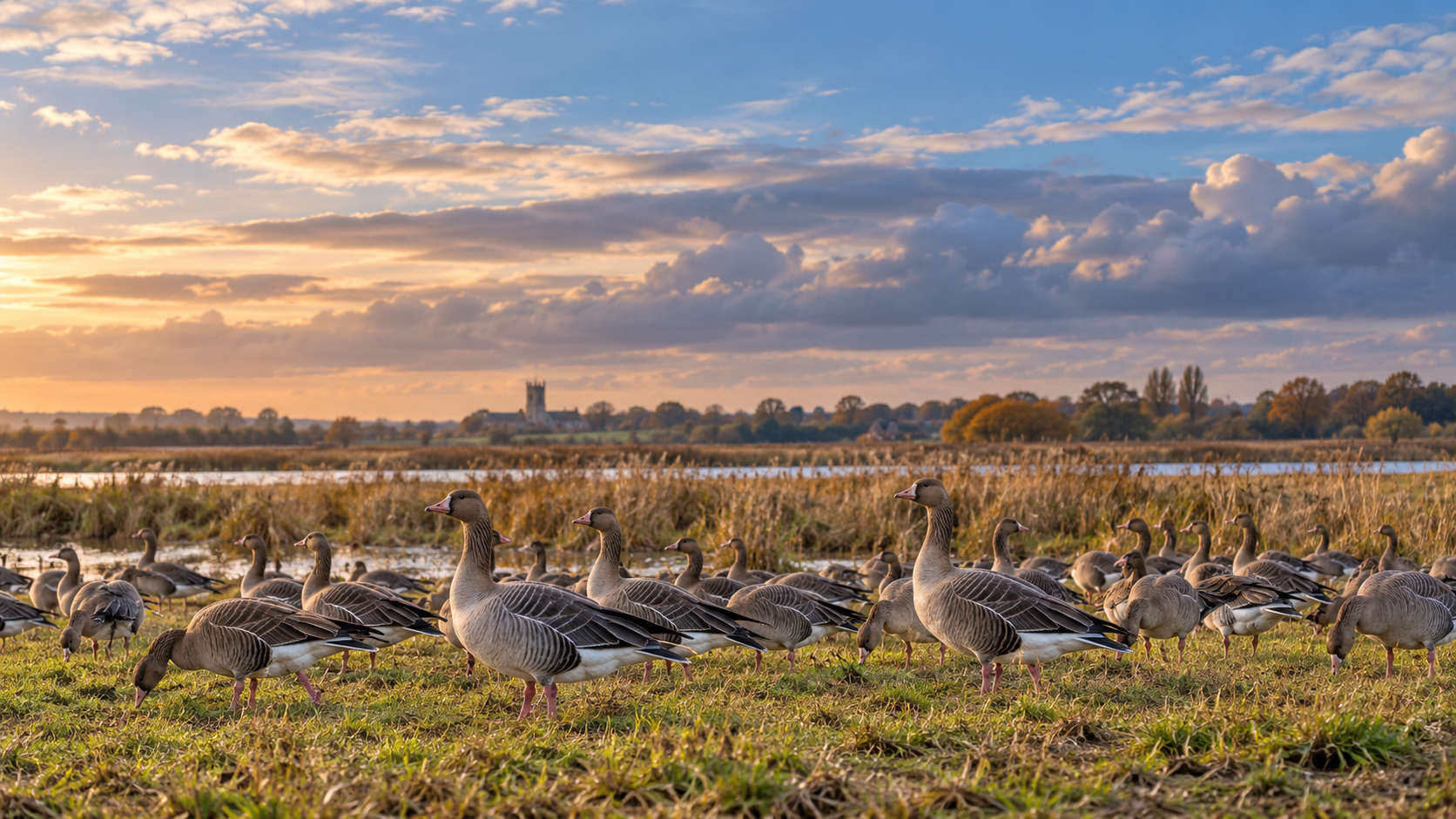
If you want to identify one on the ground, the pink-footed goose is relatively small compared with some other geese. It has a grey-brown body, a short neck and, as the name suggests, pink legs and a short bill with pink colouring.
From a distance, however, it is often the sound and the sheer number of birds that make the biggest impression.
Their arrival is also part of a much bigger seasonal change taking place around us.
Autumn migration brings birds from huge distances to the East Anglian coast, while other species depart Britain for warmer climates. For wildlife lovers, it makes October one of the most interesting months to get outside and simply see what turns up.
Norfolk's landscape has always been shaped by its enormous horizons, but at this time of year those skies become part of the show.
So over the next few weeks, listen out for that familiar honking overhead.
Look up and you may find hundreds of travellers making a journey of well over a thousand miles to spend their winter in our part of the world.
That's a pretty spectacular seasonal arrival — and one we get to enjoy right on our doorstep.